How Did the Ancients "Eat" the Essence of Sun and Moon, for Expelling Evil and Healing Illness!
Daoist health cultivation culture is profound, among which "Fu Qi Bi Gu" (Ingesting Qi and Abstaining from Grains) is a highly distinctive and systematic practice. It is not simple fasting but a complete system for nourishing body and mind, dispelling illness, and prolonging life by absorbing the essence (Primordial Qi) of heaven, earth, sun, and moon through specific breathing, visualization, and guiding techniques. This article aims to systematically organize the various methods of "ingesting Primordial Qi" recorded in ancient texts, revealing the operational logic and modern insights behind the written records.
I. Overview of Fu Qi Bi Gu: The Progression from Healing to Ingesting Qi
Daoist Fu Qi Bi Gu is not achieved overnight; its practice follows a clear sequence aimed at establishing a physical and mental foundation for deeper cultivation.
-
Preparation Stage: First, regulate the body, treat old ailments, and ensure the smooth flow of Qi and blood in the five viscera.
-
Cleansing the Intestines: Then, clear intestinal stagnation through methods like mild laxatives.
-
Gradual Abstention from Grains: Gradually reduce and eventually cease daily food intake, shifting to "Fu Qi" (swallowing the Primordial Qi of heaven and earth) as the primary source of energy for the body.

II. Detailed Explanation of Core Fu Qi Methods: Gathering the Essence of Sun, Moon, and Stars
The core of Fu Qi lies in consciously guiding and swallowing "Qi." Methods are diverse, with the core principle being synchronization with the rhythms of nature.
-
Method of Ingesting Sun Qi:
-
Time & Posture: Sit quietly facing the sun at sunrise.
-
Method: Close eyes, make a fist, visualize five-colored clouds of Qi from the sun, draw them into the mouth and swallow. Repeat 45 times, then swallow saliva 9 times.
-
-
Method of Ingesting Moon Qi:
-
Time & Posture: Sit quietly facing the moon when it first rises at night.
-
Method: Similar to the Sun Qi method, swallow Qi 50 times, then swallow saliva 10 times.
-
-
Method of Ingesting the Six Wu Qi:
-
Timing Basis: Starting from the "Jiazi" day in the Chinese calendar.
-
Method: Face the Chen direction (southeast), stir the teeth with the tongue to promote saliva production, then swallow. This method is essentially an evolution of the "saliva swallowing" technique, emphasizing the use of self-produced subtle substances.
-
-
Three-Five-Seven-Nine Fu Qi Method:
-
Method: Inhale gently through the nose, swallowing into the abdomen in stages. Steps: Inhale three times, exhale once; inhale five times and swallow, exhale once; inhale seven times and swallow, exhale once; inhale nine times and swallow, exhale once. Characterized by deep, long, even, and fine inhalations, and short exhalations. After long-term practice, one inhalation can be divided into multiple swallows.
-
-
Li Fengshi's Fu Qi Method:
-
Posture: Lie flat without a pillow.
-
Key: Close eyes, make a fist, ingest Qi as gently and slowly as a baby suckling, sending the Qi directly below the navel (Dantian). This method can be practiced anytime, offering flexibility.
-

III. Recumbent and Side-Lying Fu Qi Methods: Combining Guiding and Visualization
Some methods incorporate specific lying postures to optimize Qi movement.
-
Maoshan Sage's Fu Qi Method:
-
Posture: Lie on one's side with the ribs touching the bed, head east, face south, fists held against the cheeks.
-
Method: Close eyes, draw in Qi, open the throat wide, and swallow Qi in large gulps. Start with one swallow per exhalation, gradually increasing to seven swallows per exhalation. Then practice in a sitting posture (hugging knees, holding breath, puffing the abdomen).
-
Effects: Often results in warmth and sweating in the head and feet, fullness of Qi in the abdomen and stomach, and comfortable joints after practice.
-
-
Fu Qi Method Transmitted by Tang Dynasty's Zhang Guo:
-
Posture: Often lie supine.
-
Key: Breathe extremely subtly, making the sound inaudible to oneself. After inhalation, hold the breath without swallowing until the soles of the feet sweat. When the chest feels extremely stuffy, exhale and inhale slightly. This method can replace food.
-
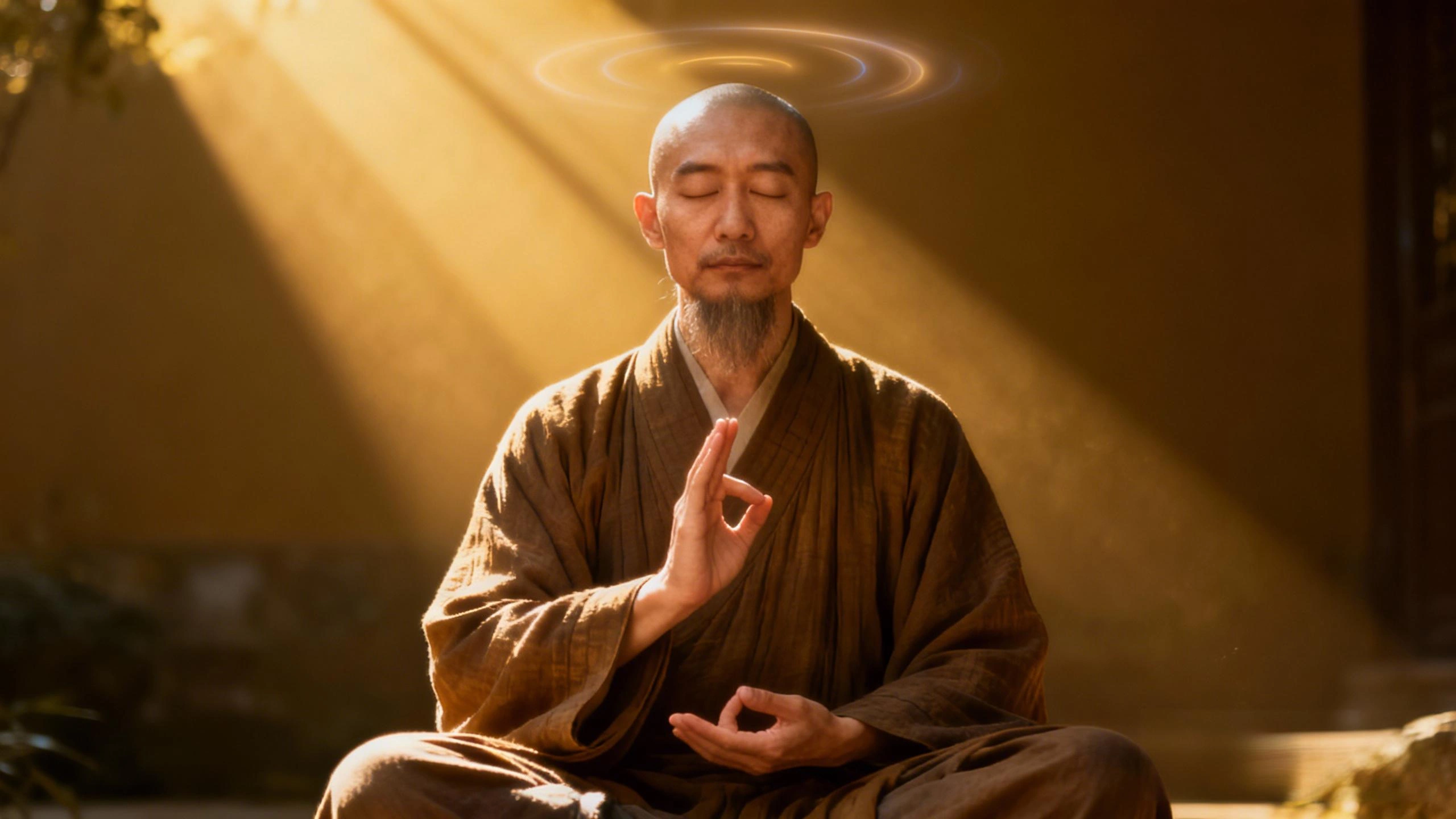
IV. Intention-Guiding and Visualization Fu Qi Methods: Mobilizing Mental Energy
These methods focus more on conscious guidance and internal visualization.
-
Wang Shuo Shanren's New Fu Qi Method:
-
Core: Does not emphasize breath-holding or swallowing but combines intention-guiding and visualization. When feeling hungry, "eat Qi," visualizing ingesting new Qi from above and expelling old Qi from below. If Qi stagnates, guide it with intention or assist with walking and guiding exercises to clear it.
-
-
Method of Nourishing the Five Viscera with Five Elements Qi:
-
Principle: Based on the correspondence between the Five Elements (Wood, Fire, Earth, Metal, Water) and the Five Viscera (Liver, Heart, Spleen, Lungs, Kidneys), visualize inhaling Qi of different qualities to nourish the corresponding organs, achieving overall balance and health.
-
V. Auxiliary Dietary Therapy and Saliva Cultivation: Abstaining from Grains, Not Nutrition
Fu Qi Bi Gu does not completely cut off nutrition; it is often supplemented with specific medicinal foods and saliva cultivation methods.
-
Auxiliary Medicinal Substances: Often take pastes, pills, or powders made from substances like Poria cocos, Jujube, Black Sesame, and Siberian Solomon's Seal through traditional processes like "nine steamings and nine sun-dryings," such as "Tai Qing Jin Ye Gao," "Fu Ling Gao," and "Hu Ma Fan," to nourish Qi and blood.
-
Rinsing and Swallowing the Hua Chi Method: Often hold a jujube pit in the mouth to stimulate saliva ("Hua Chi Water") production. When the mouth is full of saliva, swallow part and keep part, swallowing it together with Qi, repeating the cycle. This method emphasizes the importance of "saliva" in health cultivation.
VI. The Ultimate Goal and Philosophy of Fu Qi Bi Gu
In summary, the ultimate goal of Daoist Fu Qi Bi Gu is not merely enduring hunger but achieving an "internally nourished" state of "Qi fullness without desire for food" through special training. As Tang Dynasty's Zhu Taozhi said, through internal and external tranquility, one achieves stable spirit and harmonious Qi, correct Primordial Qi, and smooth flow in the five viscera, ultimately realizing the physical and mental transformation of "strong marrow and solid bones, returning to youth and origin." It embodies the Daoist profound view of life: "unity of heaven and human" and "borrowing the essence of heaven and earth to nourish oneself."