

The Four Cornerstones of Daoist Cultivation: Dharma, Wealth, Companionship, Place
The pursuit of the Daoist path to immortality is not a vague fantasy but a systematic framework for physical, mental, and spiritual refinement summarized by ancient practitioners. Among these, "Dharma, Wealth, Companionship, and Place" are regarded as the four indispensable cornerstones for formal, dedicated practice. This article delves into the specific meanings, functions, and modern implications of these four essential elements.
I. Dharma: The Fundamental Path and Guiding Principles
"Dharma" refers to the specific cultivation methods, i.e., the Dan (Elixir) techniques. It is the roadmap and technical core.
-
Internal vs. External Dan: Early practices focused on Waidan (external alchemy, concocting medicines). The focus shifted to Neidan (internal alchemy, refining one's essence, qi, and spirit) after the Tang and Song dynasties. Neidan is the mainstream today.
-
Diverse Schools: Neidan itself branched into different schools like the Northern Lineage (emphasizing quietistic practices) and the Southern Lineage (emphasizing complementary practices), further evolving into Eastern, Western, and Central schools—hence the saying, "Three thousand six hundred gates to the Dao."
-
Effectiveness Overrides Hierarchy: While methods vary, their core principles interconnect. Choosing a method suitable for one's constitution, innate endowment, and environment is crucial. Master Chen Yingning analogized it to traveling from Shanghai to Nanjing: walking, taking a train, or flying are all viable, but the direction must be correct.
-
Dharma in a Broad Sense: Also includes methods and conditions like constructing a Dan chamber, selecting an environment, and adapting to specific issues during practice.
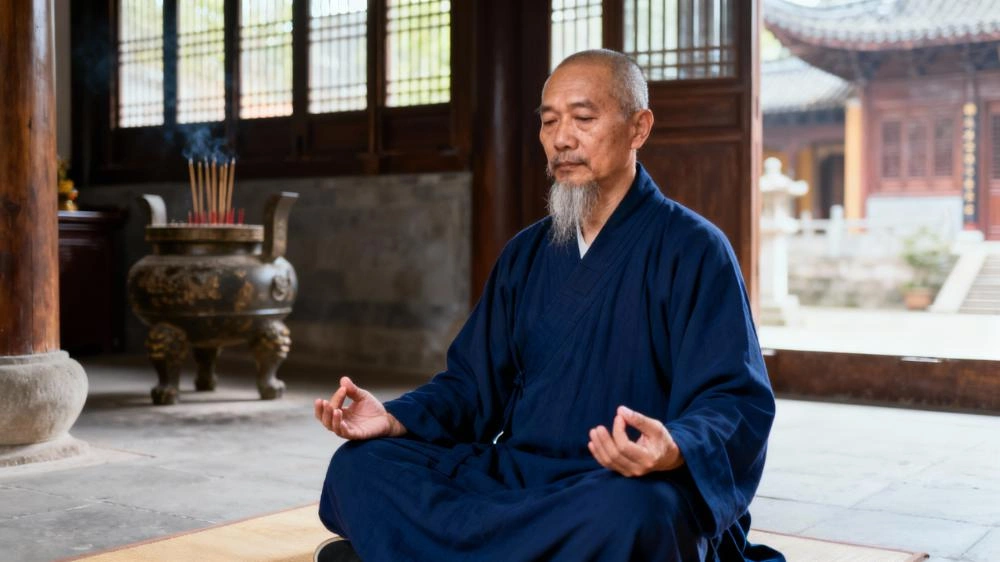
II. Wealth: Internal and External Resources Supporting Cultivation
"Wealth" refers not only to external funds but also to the cultivator's internal capital.
-
External Wealth (Funds):
-
Purpose: To settle family affairs, support oneself during cultivation, finance travel for learning, and provide for supportive companions. Ensures the practitioner can focus without worldly worries.
-
Key: Requires a "living source" of income, wise management, and avoiding exhausting finite resources.
-
-
Internal Wealth (Personal Capital):
-
Core is Health and Vitality: Cultivation requires a healthy body as its foundation. The Daoist path prioritizes health preservation and longevity. One must possess ample internal "vitality" or life force, the fundamental internal capital for practice.
-
Misconception: Success is unlikely if one focuses solely on external wealth while neglecting internal wealth (personal health and aptitude).
-

III. Companionship: Like-Minded Practice Partners and Protectors
"Companionship" refers to the Daoist friends and partners needed during practice. Its core is "shared aspiration," not a narrow, specific definition.
-
Primary Roles:
-
Life Support: Handle daily chores, allowing the practitioner to concentrate.
-
Discussion and Verification: Jointly study phenomena and problems arising during practice to prevent deviation.
-
Safeguarding: Provide protection during deep meditation (e.g., "facing the wall") to prevent accidents.
-
-
Essential Requirement: They are "kindred spirits" who share the same virtue and goal of protecting and realizing the Dao. Ancient texts emphasizing "three people with one will supporting each other" highlight this mutually supportive, protective relationship.
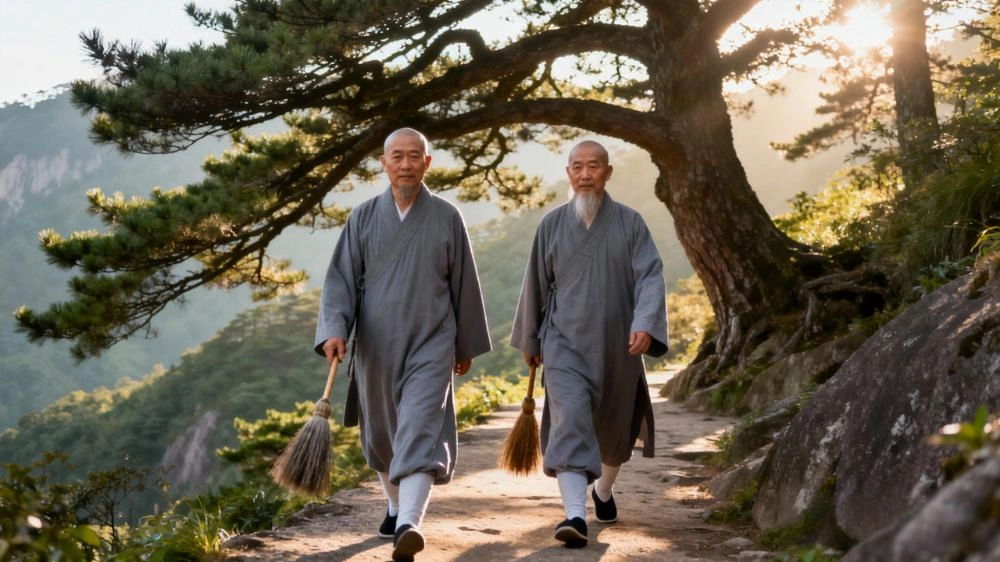
IV. Place: The Physical Environment Suitable for Cultivation
"Place" refers to the practice location, which directly influences energy fields and mental states.
-
Ideal Environmental Factors: Near mountains/forests, far from noise, fresh air, flowing springs, ample sunlight, sheltered from wind/cold, simple local customs, and convenient living conditions.
-
Requirements for Different Stages (proposed by Chen Yingning):
-
Preliminary Stage: Needs a place with "flourishing life energy" — beautiful landscapes to nourish one's primordial qi.
-
Intermediate Stage: Needs a place where "spiritual energy coalesces" — blessed grotto-heavens ideal for developing spiritual capacities.
-
Advanced Stage: Needs a place with "predominant austere energy" — perilous, secluded peaks conducive to ultimate transcendence.
-
-
Modern Implication: If retreating to wilderness is impossible, strive for a quiet, clean, well-ventilated living space, creating a mini "pure land."
V. Change Over Time and Modern Application
Even ancient full-time practitioners found these four elements challenging to assemble; modern individuals need even more flexibility.
-
Internalization and Symbolism: Huang Yuanji proposed the concept of "Internal Dharma, Wealth, Companionship, and Place," mapping the four elements to the internal landscape of cultivation (e.g., internal qi as "Wealth," the mystical cavity as "Place"). This provides a theoretical basis for home practice.
-
The Mundane World as a Dao Field: Modern practitioners can adopt the attitude that "the dusty world is the same as deep mountains." Focus on societal duties while using leisure time for foundational health practices (e.g., meditation, Tai Chi) to strengthen "Internal Wealth" and accumulate merit and wisdom.
-
Advance When Conditions Ripen: When life is relatively stable (having "External Wealth"), with good teachers and friends (having "Companionship"), and a suitable environment is created or found (having "Place"), then one can delve deeper into specific "Dharma." This leads to twice the result with half the effort.
Conclusion
The four elements of "Dharma, Wealth, Companionship, and Place" systematically outline the complete support system required for traditional Daoist cultivation. It reminds us that any profound self-transformation and transcendence requires not only the correct method (Dharma) but also resource support (Wealth), companionship (Companionship), and a suitable environment (Place). This holds deep relevance for modern people seeking physical and mental health, personal growth, and even career success. True practice lies not in form but in diligent, integrated effort and the skillful creation of conducive conditions.